Malasana, also called the yoga squat pose, is one of the most grounding, practical yoga postures. This ancient resting pose develops mobility, strength, balance, and body awareness. When we spend hours sitting in chairs, the body gradually becomes unable to squat deeply and comfortably.
The yoga squat position can seem easy, yet It provides a deep stretch for the ankles, knees, groin, hips, and lower back. It will also teach you to connect breath and stability. No matter how new or advanced in your yoga practice you are, learning Malasana may change the way your body moves. To practice safely and confidently, here you will find proper alignment, common mistakes, modifications, and the most important benefits in a complete guide to Malasana.
What is Malasana?
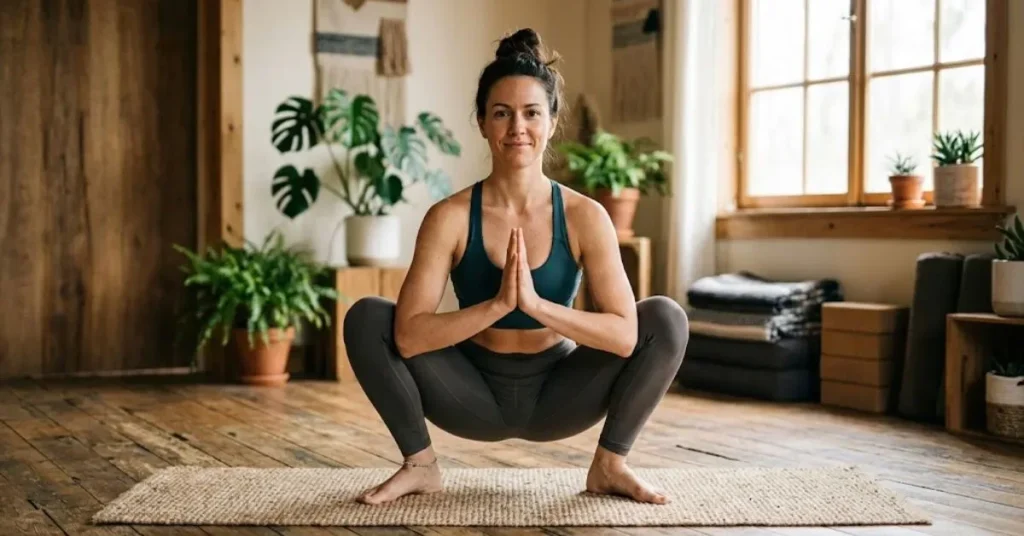
Malasana is a Sanskrit word: mala means garland, and asana means pose. It is characterized by a low squat with the feet on the ground, knees open, and the palms clasped in the chest. It is regarded as one of the most relaxing and purifying poses.
The yoga squat position is more than a stretch. It is a normal human posture for rest, and it helps keep the hips and pelvis free and mobile. The deep squat yoga pose is a common transition, resting pose, and preparation pose before arm balances and seated meditation in yoga classes. The malasana yoga pose is among the most ideal poses for students who wish to enhance posture, breathing, and lower-body function, due to its accessibility and depth.
Yoga Squat: How to Practise the Pose
- Start by standing with the feet slightly wider than the hips. Turn out the toes slightly, relying on your hip comfort. Bend your knees slowly and hinge your pelvis towards the ground. Put your palms together in front of your chest, and your elbows against your inner knees. Stretch the spine and stretch the shoulders.
- To perfect the yoga squat, root down through the heels as much as possible. If your heels rise, place a folded blanket or a rolled mat under them. Keep your chest open and control your breath. Collapsing is not the goal focus for a balanced, raised form of the deep squat yoga pose.
- Remain 5-10 breaths. To get out, put your hands on the floor or your thighs and get up slowly. The malasana yoga pose will be more comfortable and stable with practice.
You May Also Like:- Why Stretching Daily Is The Key To Your Fitness Routine
Alignment Tips for a Safer Malasana
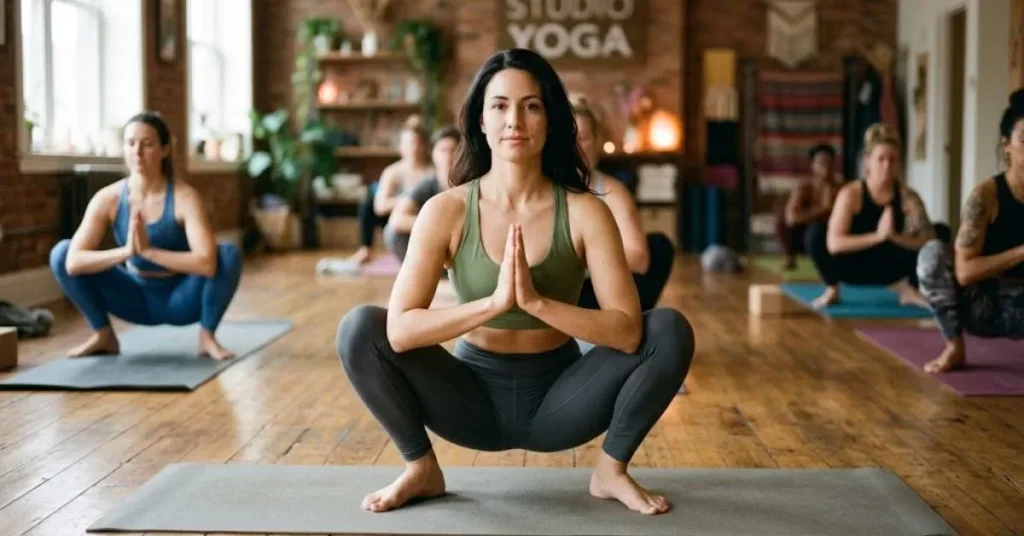
All the difference in this pose comes down to good alignment. In the squat pose in yoga, your spine must remain straight; it must not bend. Move your toes in the same direction as your knees. Only lower your hips as far as your body comfortably allows.
The following are essentials:-
- Maintain the chest in the air.
- Bend the palms inwards to open the hips.
- Scuff with the heels or pad when necessary.
- Massage the center to safeguard the lower back.
- Unclench your jaw and take a deep breath.
Yoga students believe that the deep squat yoga pose is not only about flexibility but also requires control and patience. The malasana yoga pose is stable and spacious when performed mindfully.
Yoga Squat Whole Body Benefits
Yoga teachers admire Malasana for different reasons. The benefits of malasana are convenient, fast, and profoundly restorative.
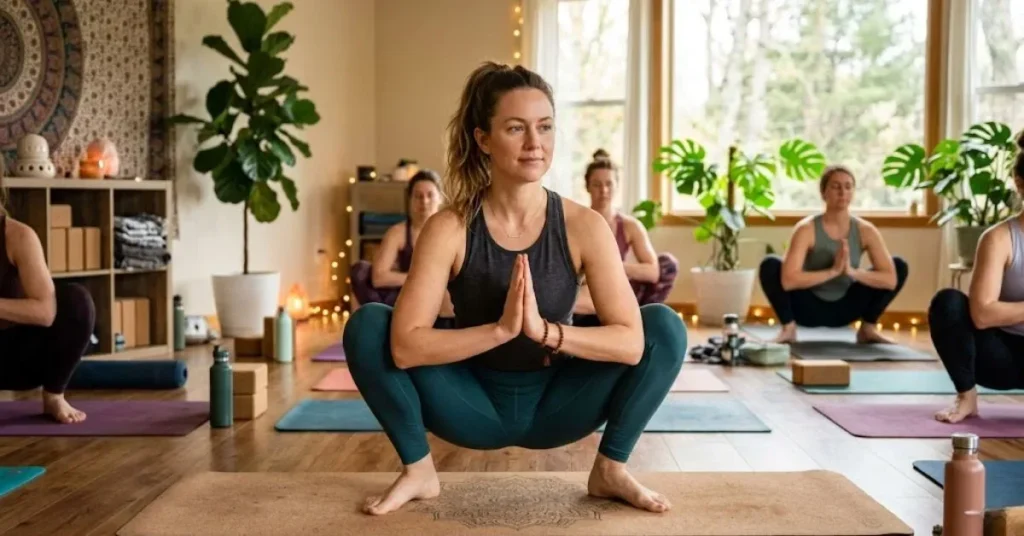
- Malasana improves hip mobility. Tight hips are common among individuals who sit for long hours, and this pose gently opens the groin and inner thighs.
- The yoga squat increases calf and ankle flexibility. As the ankles are required to bend deeply in the deep-squat yoga posture, with practice, lower-leg mobility and balance can be enhanced. The feet are also strengthened through the pose, and the spine is promoted to maintain good posture.
- Malasana also has benefits to the digestive system and the pelvic floor. Since the body is grounded and folds inwards in a healthy manner, the pose can promote healthy elimination and pelvic awareness. Another aspect that many practitioners observe is that the malasana yoga posture relaxes the nervous system and develops a sense of emotional release.
- When you need a posture that facilitates daily movement, Malasana is one of the most helpful yoga poses. From mobility to mindfulness, the benefits are both ancient and modern.
How Malasana Builds a Base for Yoga?
Related postures to Malasana are also a part of a well-rounded practice. The half frog pose is great for opening the anterior of the thighs and enhancing hip space, for example. If your squat is tight, it might be worth practicing a half-frog pose in front of Malasana. The half frog yoga pose may also be used as a counterpose to the squat.
Others combine Malasana with side plank forms of yoga to develop core and shoulder strength. Although the yoga squat pose stretches the hips and grounds the body, side plank yoga postures engage the obliques and enhance balance. Side plank yoga variations will establish a powerful contrast to the inner tenderness of the squat in a flowing sequence.
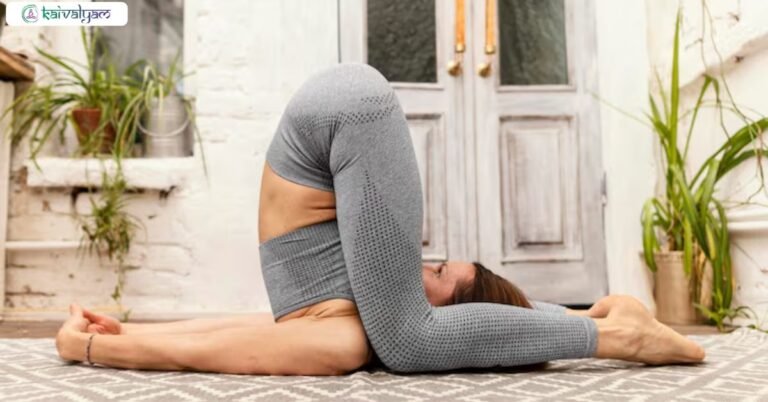
You will also come across people comparing restorative poses, such as the snail pose yoga, to highly compact poses, such as Malasana. Snail pose in yoga is structured very differently, but both poses promote introspection. Snail pose can manifest in restorative or more profound practices, as a distinct method of reversing the outward activity of the hips.
The Cheetah yoga pose is not a traditional designation in every school of yoga, but it can be used informally in innovative movement studios. When you love animal-themed flows, the yoga pose may be seen as part of a wider mobility practice, yet Malasana is still one of the shapes used as a basis for grounding and alignment.
Final Words
Malasana is an excellent place to start getting a posture that combines mobility, strength, breath, and mindfulness. Squat yoga or Malasana proves that a simple squat can be a very effective teacher. The squat yoga pose is a reminder of the body’s innate intelligence.
The deep-squat yoga posture restores the mobility stolen by modernity. A few minutes in this pose can offer a real respite from sitting through a hectic day. From better mobility to deeper breath, the yogi squat benefits are difficult to overlook. No matter which type of training you do (alone or in a studio), the advantages of malasana can help you reinforce your daily wellness in uncomplicated, sustainable ways.
Common Questions
A. Yes, the malasana yoga pose is easy to practice, using props and mindful alignment.
A. The primary benefits of the yogi squat include hip opening, ankle mobility, improved posture, and grounding.
A. Not exactly. The yoga squat pose focuses on breath, the pelvic aperture, and spine length.
A. Yes. It complements the half-frog pose, side plank variations, and even restorative yoga, such as the snail pose.
A. Not directly. It is a newer search term, while Malasana is an ancient, deep-squat yoga pose with roots in traditional practice.
More to Explore:-