Sambhavi Mudra is an advanced yoga practice, and for newcomers, it is a very tiring procedure. It is mentioned in ancient texts like Gheranda Samhita, Shiv Samhita, Hatha Yoga Pradipika, and Anamaska Yoga. These are all advanced texts that show practice of the core stage. The name “Sambhavi” explains the feminine aspect of lord Shiva.
It is also written that a person who practiced it became like lord Shiva. There are some institutions in India that particularly work on the Sambhavi Mudra and teach the technique to practice it. It is just fixing the gaze at the center of the eyebrows, but this fixing is very tough. The practitioner rolls their eyes inward and does that.
What are the Benefits of Sambhavi Mudra?
Sambhavi Mudra is also known as Sambhavi Mahamudra, which is not a usual practice. When you do it bluntly, it also gives a headache and sometimes dizziness after long practice. It is told during practices that you should hold it only for sometime which sounds comfortable for you. The benefits of Sambhavi mudra are numerous, but they depend on the way it. It gives a soothing effect to the mind and body; it is used for calming the brain. Here are some of the common benefits of Sambhavi Mudra:
- It has soothing effects on the brain, it reduces overthinking, and makes the brain more intellectual.
- Its constant practices result in increasing Brain-Derived Neurotrophic Factor.
- Cortisol level in the body gets reduced, meaning it directly affects the stress level of a person.
- It is a very good practice for increasing concentration, and you can also practice meditation after the Sambhavi Mudra.
- It also awakens the Third Eye Chakra out of 7 Chakras in the body, which helps you give insights about the person, place, and things.
- Reduces inflammation in the body by activating good hormones and protecting from chronic diseases.
The overall effect on the body is relaxing and healing. It also connects with the higher self. Sambhavi Mudra has spiritual aspects too, which make it more special to perform.
Read Post:- What is Meditation and Mindfulness ?
How to Perform Sambhavi Mahamudra Kriya?
In some texts, it is also known as a form of kriya, which should be practiced on an empty stomach and has a healing effect on the body and mind. It is designed to activate the Third Eye Chakra, and it is a 21-minute procedure. The procedure involves bringing awareness to certain points on the body and focusing on them. Here is the complete procedure:
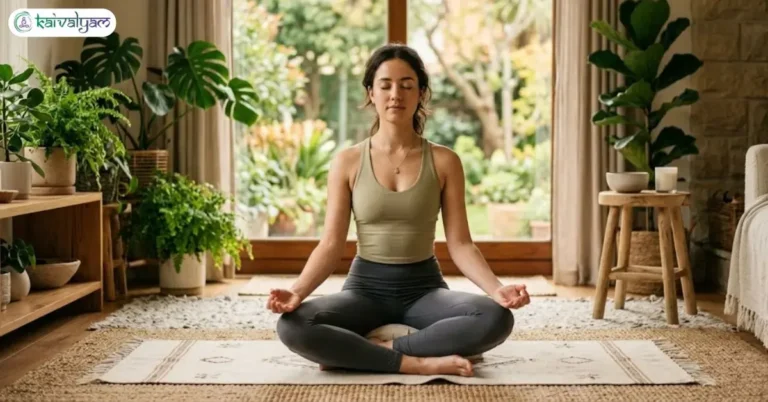
- Sit in the silent room where there are no voices and no disturbances.
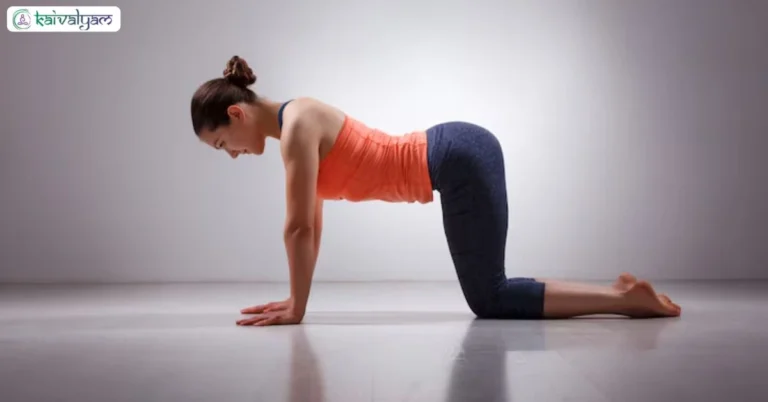
- Perform some preparatory poses like the cat cow pose, baby pose, and butterfly pose.
- Bring your awareness to your breath and try to keep your breath rate slow.
- Inhale slowly and deeply, exhale through your mouth, and after that, do some box breathing.
- You can perform this kriya in Gyan Mudra, which is simple to hold.
- Then do “OM” chanting 21 times; it should be deep and slow with a complete sound that resonates throughout your body and mind.
- The next step is performing Bandhas: moolbandha, Uddiyyan Bandha, Jalandhara Bandha.
- Then it involves open monitoring meditation for 5 minutes.
- In the last section, you roll your eyes upward and fix your gaze between your eyebrows.
- Try to keep it firm and not more than two minutes at first. As you go into advanced practice, you can increase your time.
That fixing the gaze is hard, it is better to practice the Sambhavi Maha Mudra Kriya under the guidance. The practice involves kinds of Bandhas, which are an exclusive practice for Yogis. It is also considered a Guru-shishya Pramapara. Some other texts only give rolling eye position along with some pranayama.
What are the Precautions of Sambhavi Mahamudra?
The very first precaution is to practice it under the guidance of a Guru; otherwise, it can also backfire on you. Patients with mental problems and eye problems should not perform Sambhavi Mahamudra. Many institutions give a complete course of Sambhavi Mahamudra, you can go there premises. Here are some precautions for Sambhavi Mahamudra:
- People with glaucoma, retinal problems, recent eye surgery, or chronic eye strain should avoid practicing Sambhavi Mahamudra.
- Patients with conditions such as headache, vertigo, epilepsy, and migraine should avoid Sambhavi Mudra.
- Uncontrolled hypertension and dizziness with serious neurological conditions are also signs to avoid all advanced Kriyas.
- Don’t put too much effort into performing the Mudra
- Don’t perform it fro prolonged duration.
- Never do it alone without any Guru or master.
- If there is pain or headache while performing Sambhavi mudra stop immediately and tell your master about the practice.
- Never be in hurry while performing Kriya and don’t try to take it as quick fix.
Also Go Through:- 100 Hour Yoga Training Course in Rishikesh
Conclusion
To sum up, this advanced yogic practice enhances concentration and mental clarity along with emotion balance and inner awareness if practiced on a regular basis. You can also use this practice to deepen your ability to meditate and feel calm spiritually.
Like other advanced yogic techniques, as long as you understand how to perform it correctly, take care not to overdo it, and have an experienced teacher guide you through the practice, it can be beneficial to you. You can use this technique to improve your mental wellness and overall quality of life if you consistently perform practices mindfully.
Frequently Asked Questions
A. Sambhavi Mudra is an advanced yoga practice, and for newcomers, it is a very tiring procedure. It is just fixing the gaze at the center of the eyebrows, but this fixing is very tough. The practitioner rolls their eyes inward and does that.
A. 40 days is one complete Mandala, and after that this practice became involuntary to many Yogis. So it is suggested to people performing it that you can continue your practice upto 40 days to complete a Mandala which is a cycle of energy.
A. Yes, you can eat but try to eat Satvik meals and don’t eat frozen food. There is seaptrate guidelines on what to eat during practice of Sambhavi Mudra. In simple words you have to eat mindfully and you can take a gap of 10 to 15 minutes after performing Sambhavi mahamudra.
A. In some texts, Sambhavi Mudra is also known as a form of kriya, which should be practiced on an empty stomach and has a healing effect on the body and mind. It is designed to activate the Third Eye Chakra, and it is a 21-minute procedure.