Meditation is a practice. Mindfulness is a quality of attention. People often use these two words as if they mean the same thing, but they don’t. Understanding the difference between mindfulness and meditation won’t just satisfy your curiosity—it can actually change how you practice and what you get out of it. Not all meditation is the same. Mindfulness meditation and transcendental meditation, for instance, take almost opposite approaches.
Studies from Harvard, the University of Oxford, and Johns Hopkins have examined changes in brain structure, cortisol levels, blood pressure, and emotional regulation after consistent practice. Eight weeks is the minimum window most studies use to track these changes.
What is Meditation and Mindfulness?
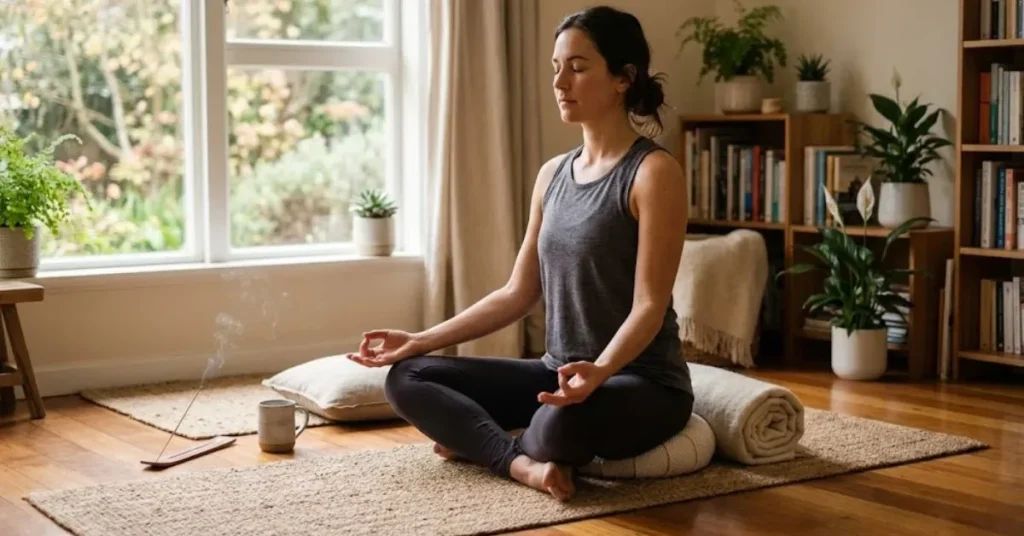
When you sit for 20 minutes and focus on your breath, that’s meditation. When you notice the weight of your coffee mug while you drink it, paying full attention without your mind drifting to your to-do list, that’s mindfulness. One is a scheduled activity. The other is a way of moving throughout your day.
The question sounds simple, but most people expect a neat two-sentence answer. The reality is messier. Meditation is one of the oldest structured practices on the planet, dating back at least 5,000 years in the Vedic tradition.
Mindfulness, as we talk about it today in clinical and wellness settings, is a modern adaptation. Jon Kabat-Zinn introduced Mindfulness-Based Stress Reduction (MBSR) at the University of Massachusetts Medical School in 1979. He borrowed from Buddhist Vipassana, stripped the religious framing, and built a reproducible 8-week program.
The Real Differences Between Mindfulness and Meditation
Meditation requires you to stop what you’re doing. You set a timer. You sit. You follow a method, whether that’s watching the breath, repeating a mantra, or doing a body scan. The practice has a beginning and an end. Mindfulness doesn’t require stopping. You can practice it while washing dishes, walking to the bus stop, or listening to someone talk.
The distinction between the two comes down to structure, location, and intent. Meditation is formal. Mindfulness is informal. Meditation trains the mind in a controlled setting. Mindfulness applies that training to ordinary life. Think of it this way. Meditation is the gym. Mindfulness is how you carry yourself when you’re not in the gym. Mindfulness and meditation work together. One without the other leaves gaps.
You May Also Like:- Best Poses of Yoga for Fatigue
Mindfulness vs. Transcendental Meditation
Mindfulness meditation keeps your attention on the present moment. You observe thoughts, sensations, and emotions without latching onto them. The goal is clear, non-reactive awareness. You’re watching what arises without chasing it.
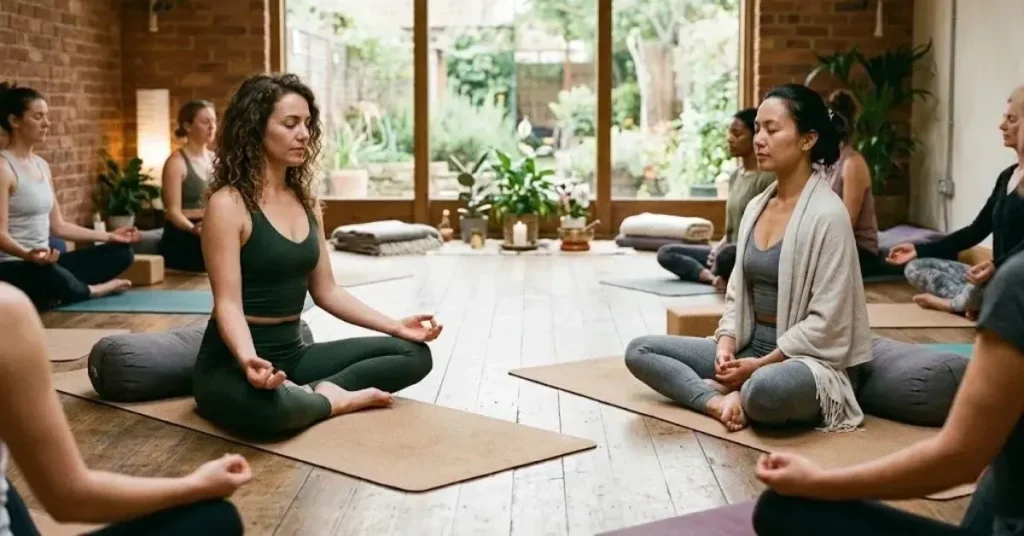
Transcendental meditation works differently. You repeat a specific mantra silently, 20 minutes twice a day, sitting with eyes closed. The mantra acts as a vehicle to let the mind settle into quieter states. There’s no effort to control or observe thoughts. You are not watching your mind. You’re letting it rest beneath its activity. The core difference often comes down to effort vs. effortlessness. Mindfulness meditation involves active attention. Transcendental meditation is described by its practitioners as effortless, a release rather than a focus.
Benefits of Meditation and Mindfulness
Harvard Medical School researchers found that an 8-week mindfulness program produced measurable changes in the hippocampus—the part of the brain tied to learning and memory. Anxiety-related brain activity dropped noticeably. This wasn’t self-reported. They used MRI scans.
These benefits span physical and mental health. Regular meditators show lower cortisol levels. A 2019 study in Psychoneuroendocrinology found that three months of meditation reduced cortisol levels by nearly 26% in participants with high baseline stress. Sleep quality improves. Blood pressure drops. Focus sharpens.
There’s also the emotional side. People who build a regular practice report better relationships, not because the practice teaches them relationship skills, but because they react less. The benefit of less reactivity is often overlooked.
The benefits of meditation aren’t instant. Most studies that show structural brain changes use 8 weeks as the minimum time frame. Consistency matters more than duration per session. Ten minutes every day beats 60 minutes once a week. Try this. Pick one time slot tomorrow and sit for 10 minutes. Just that. Don’t plan the whole week.
Meditation of Mindfulness: How the Two Blend in Practice
The term often describes mindfulness-based meditation specifically, where formal sitting practice trains you to be more mindful during the rest of your day. At Kaivalyam Yoga, this integration sits at the heart of how the practice is taught. Yoga philosophy doesn’t separate the formal from the informal. Dharana (concentration) and Dhyana (meditation) in Patanjali’s Ashtanga system are sequential stages, not isolated techniques. Mindfulness is the thread that runs through all of them.
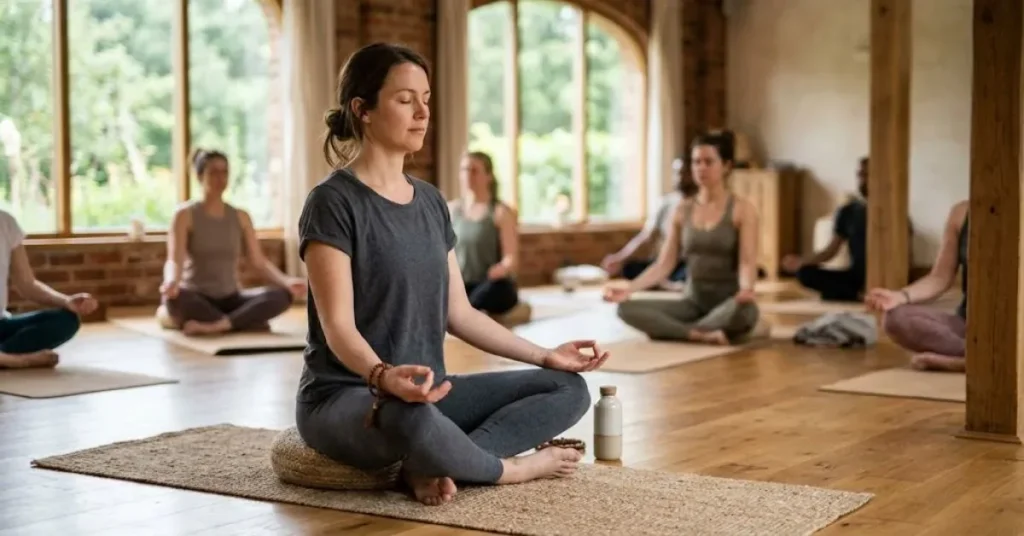
In a typical mindfulness meditation session, you might spend 20 minutes sitting with your attention on the breath. The mind wanders, as minds do. You notice it wandered. You return without frustration. Repeat. That returning—done thousands of times—builds the muscle. It isn’t about achieving a blank mind. It’s about getting better at noticing when you’ve left the present and choosing to come back.
This is why teachers at Kaivalyam Yoga emphasize practice over theory. Reading about mindfulness changes almost nothing. Sitting with it, even awkwardly, changes the brain.
The Difference Between Yoga and Meditation
- Yoga, in the Western gym sense, is a physical practice of postures (asanas). But in the classical sense, yoga is a complete system of eight limbs, of which meditation is one. Asana is just the third limb. In the classical framework, yoga contains meditation, but meditation alone does not complete yoga.
- Asana practice prepares the body to sit still for long periods. Tight hips and a stiff back make it difficult to meditate for 30 minutes without fidgeting. So physical yoga isn’t separate from meditation; it’s a preparation for it.
- That said, a yoga class alone isn’t the same as a meditation practice. You can do 60 minutes of hot yoga and never train your attention in a sustained way. Asana builds physical awareness. Meditation builds mental stability.
- Pranayama (breath control) sits between the two. It’s part of yoga, and it directly feeds meditation. At Kaivalyam Yoga, the sequence isn’t arbitrary. Asana, then pranayama, then sitting practice. Each stage makes the next one more accessible.
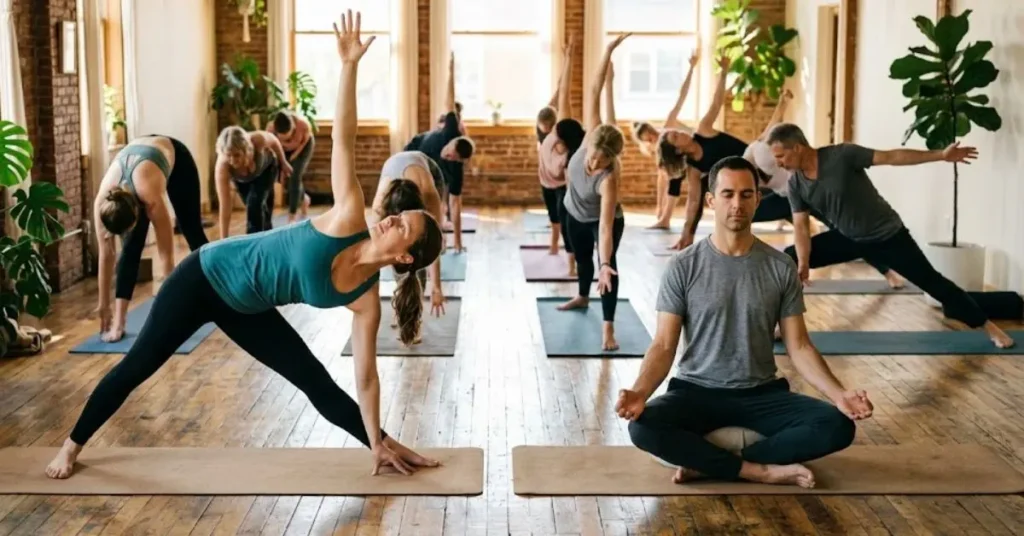
How is Yoga Different from Meditation?
Yoga, as most people practice it today, moves the body through a sequence of postures. Meditation keeps the body still and trains the mind. One is primarily physical, the other primarily mental, though both have overlapping effects on stress, focus, and nervous system regulation.
A 2018 study in the International Journal of Yoga found that combined yoga and meditation practice produced greater reductions in perceived stress than either practice alone. So the answer to how yoga is different from meditation isn’t “one is better.” It’s that they address different entry points to the same system.
At Kaivalyam Yoga, you won’t find asana taught as separate from its purpose. Postures open the body so the breath can move freely. The breath steadies the mind. A steady mind can sit in meditation. The whole sequence points in one direction. Not always linear, though. Some students come to Kaivalyam through meditation first, then discover asana later. Others start with asana and work their way inward. The path differs. The destination doesn’t.
Answers to Your Queries
A. Yes. Mindfulness is an attention quality you can bring to any activity. You don’t need a cushion or a timer. Formal meditation builds the skill faster. Informal mindfulness applies throughout the day. Both matter.
A. Mindfulness meditation trains you to observe thoughts without reacting. Transcendental meditation uses a mantra to let the mind settle naturally. One is active attention. The other is effortless rest. Both reduce stress, but through different mechanisms.
A. Yoga moves the body through postures. Meditation keeps the body still and trains sustained attention. The difference between yoga and meditation is mainly physical vs. mental, though they complement each other and are most effective when practiced together.
A. Start with what you’ll actually do. If sitting still feels impossible, begin with asana. If your body is already open, go straight to meditation practice. Kaivalyam’s approach connects both, so wherever you enter, the path takes you further inward.
Read Also:-