Yoga is for everyone. Regardless of your experience, weight, size, or abilities, you can always find practice. Most of them say they do not feel comfortable practising yoga as they are heavier than they would wish to be. Others allege that they are not comfortable practising yoga because they have not practised it before. Yoga for Plus Sized Beginners is a great way to build flexibility and confidence at your own pace. You can have yoga even when you are a beginner.
Assuming that everybody was a yoga master, what was the point of attending a yoga class? Furthermore, even when you are plus-sized, you may definitely do some yoga. We are all shapes and sizes, and we all can all practice yoga. Before you take a class or begin your practice, you do not have to wait until you have lost weight or until you have reached a certain objective.
Yoga for fat people focuses on comfort, gentle movements, and body positivity. Yoga can be of great help to you unless the doctor tells otherwise. Yoga would be the best thing to do for you in case you are in need of losing weight, becoming healthier or even just becoming more flexible.
What Is Plus-Size Yoga?
Plus-size yoga is a variation of the conventional yoga poses that is designed to accommodate plus-size people. It also considers the special body structure and abilities of bigger bodies, which makes the practice more open and reachable to all. Yoga for overweight beginners is perfect for starting a low-impact fitness routine. The conventional yoga postures are not always appropriate for the plus-size person because they are heavy and have large bodies, which can complicate some of the yoga postures and be even uncomfortable.
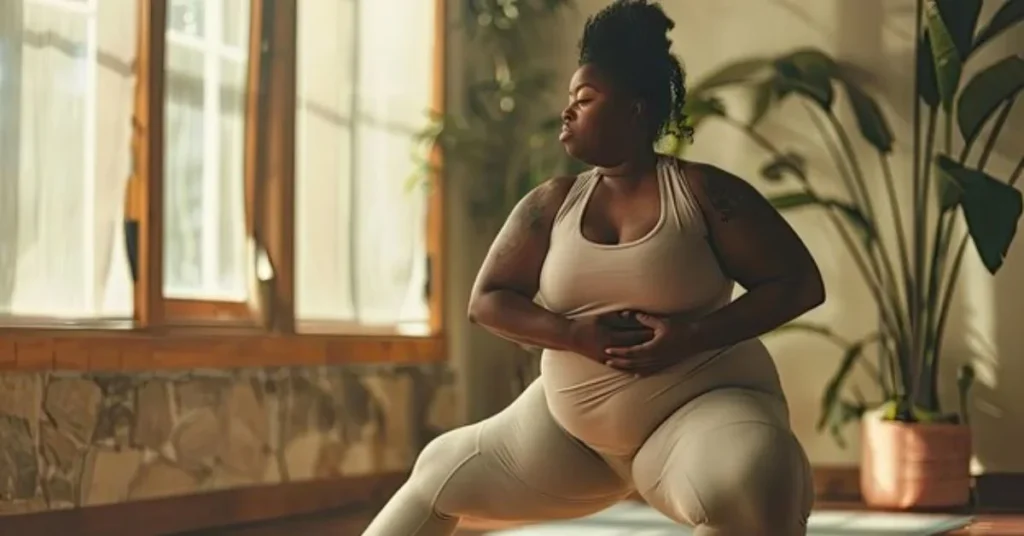
The purpose of plus-size yoga is to alter such poses, making them easier and more enjoyable for people with bigger bodies. Although yoga does not have a particular style for plus-size people, you can adjust the different styles of yoga, like Hatha, Vinyasa, or Yin yoga. The trick is to get practice that suits you and your body. You are a fitness guru, or you are a novice and just stepping into the realm of fitness and dieting.
Plus-Size Yoga Routines for Non-Experts
Yoga for obese beginners helps improve mobility and overall health safely. Inclusivity is hand in hand with yoga. This is a practice that everybody can perform without considering age, gender, or body shape. Normal yoga poses may often be limited or uncomfortable for people with big bodies. As an illustration, the poses, which imply folds or deep stretches, can be uncomfortable because of the unique proportions of a plus-size body.
This is where modified poses are invented. They are the variations of the traditional yoga poses that consider the specific body structure and abilities of people of plus-size. Modes enable beginners to relax in their practice and develop strength and flexibility progressively without being overwhelmed and discouraged.
Also Go Through:- Ashtanga vs. Vinyasa
1. Morning Stretch Routine
This gentle sequence helps to ease you into your day with mindful movement and light stretches.
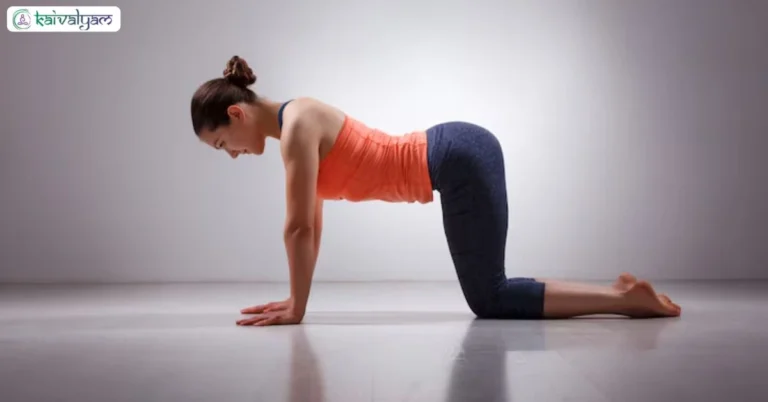
- Cat-Cow Pose (Marjaryasana-Bitilasana):- Begin on all fours, alternating between bending and rounding your back to relieve tension and increase the flexibility of the spine.
- Child Pose (Balasana):- Spread out your knees to make it more comfortable and lean forward, lying on your arms or place them next to your sides. A block or pillow under your hips can be used to help support your hips.
- Seated Forward Bend (Paschimottanasana):- Sit in a position with your legs straight and slightly forward all the way to the hips. Strap your feet to ensure that you do not overstretch.
2. Grounding and Relaxation Flow
The first flow, Grounding and Relaxation Flow, illustrates the connection between the ground and the floating phase in the circuit. The sequence is centred on grounding and relaxation, which is why it is the best one to follow at any time to unwind.
- Supported Bridge Pose (Setu Bandhasana):-To perform this yoga, lie on your back with a block under your hips for support. It allows your lower back to relax.
- Reclined Butterfly Pose ( Supta Baddha Konasana):- Lie on your back with the soles of the feet together, and the knees falling out. Make yoga blocks or cushions to support your thighs.
- Legs-Up-The-Wall Pose ( Viparita Karani):- Sit with your back straight against a wall with legs in an upright position. This mild upside-down helps to relax the weary legs and alleviate stress. Yoga for larger bodies includes modified poses to suit different body types.
3. Balancing Flow for Beginners
This yoga routine includes easy poses that improve stability. At the same time, it builds strength and focus.
- Mountain Pose (Tadasana):- To perform this step, stretch your legs by keeping the hips at a distance of half the length of your feet. Think of your back straightening up to the sky.
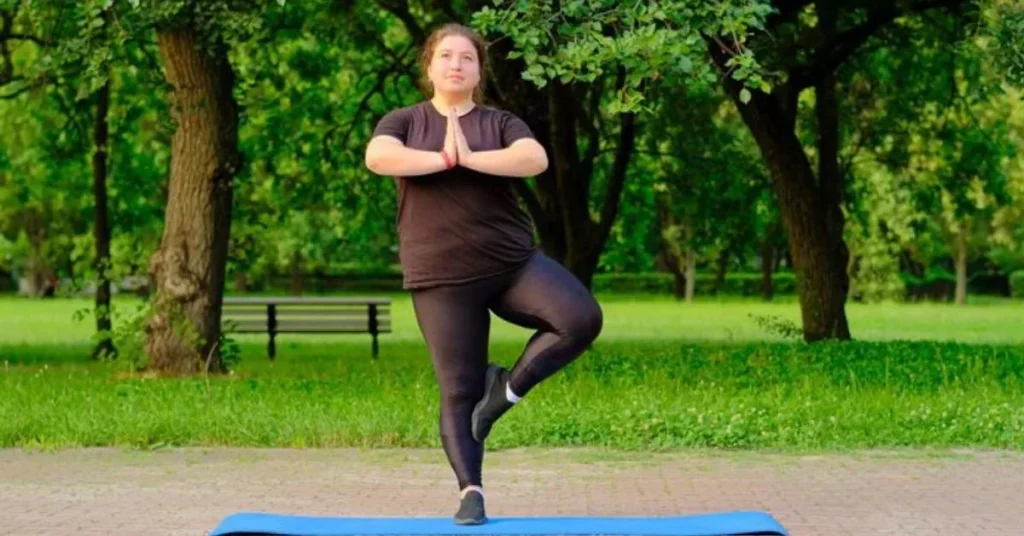
- Tree Pose (Vrksasana):- Begin by placing one foot on your ankle or calf (not knee) and balancing yourself against a wall or a chair.
- Warrior II (Virabhadrasana II):- Take a step backwards, flex your knee forward and hold out your hands. Pay attention to the breathing and balance.
Wrapping Up
Yoga is body-wise, all the way. You do not have to modify your body to fit yoga, as a plus-size beginner, because yoga can adjust to you. You can also develop strength, flexibility and confidence gradually, in your own time, with patience, supportive aids and by thinking about comfort rather than perfection. How do I start doing yoga is a common question—begin with simple poses and short sessions at home.
Consistency and self-compassion are the most important. Yoga may serve as a good exercise but in the long run, it can be an effective method of getting back in touch with your body, alleviating stress, and improving overall well-being. You have to begin where you are, respect your boundaries, and rejoice with each little progression.
Answers to Common Questions
A. Absolutely. There is no requirement for flexibility; it is a thing that becomes better with practice. Yoga meets you where you are.
A. Light forms such as Hatha, Restorative or Chair Yoga are good places to begin. Find introductory or body-positive classes.
A. It does not always have to be the case, but yoga blocks, straps, bolsters, or even a stable chair can make poses more comfortable and accessible.
A. That’s completely normal. Adjust any positions, utilize aids or omit anything that causes discomfort. Yoga is not supposed to be a strain.
You May Also Like:-